About
Gail.
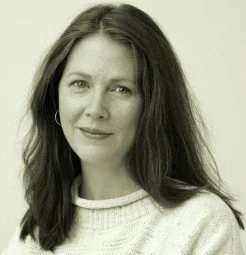
Clinical psychologist
Individual telehealth psychotherapy
Washington & Oregon
More than three decades of listening carefully.
I have been a clinical psychologist for more than thirty years.
Over those years, I have worked with people facing very different circumstances, difficulties, losses, transitions, and questions about themselves and their lives.
That is long enough to have learned a great deal about psychology—and to have become increasingly respectful of how much there is to understand about any individual human being.
No two people arrive at therapy in quite the same place. Even when two people share the same diagnosis, the experiences that brought them there, the meanings they have made of those experiences, the strengths they rely on, and the changes they hope for may be very different.
That is one reason I have never been particularly interested in reducing people to diagnoses or treatment protocols.
A diagnosis can be useful.
A theory can be useful.
A therapeutic technique can be extremely useful.
But none of them is the person sitting in front of me.
Understanding
I believe
people make
sense.
Not necessarily at first.
Sometimes the things we think, feel, or do seem irrational even to us.
We repeat patterns we know aren't helping. We worry when we know worrying won't solve anything. We avoid what matters to us. We seek reassurance and then discover that the reassurance doesn't last.
Behavior usually has a history.
Beliefs have histories.
Fear has a history.
When we understand enough about how something developed and what continues to sustain it, experiences that once seemed inexplicable often become much more understandable.
Understanding is not the same thing as remaining stuck.
In fact, understanding can give us somewhere to begin.
How I work
My work is both relational and practical.
My therapeutic foundation is humanistic and person-centered. I believe the quality of the relationship between psychologist and client matters enormously.
You should be able to speak honestly without having to monitor my reaction.
You should be able to bring uncertainty, contradiction, anger, embarrassment, humor, grief, or thoughts you haven't known what to do with elsewhere.
And you should expect more from me than attentive listening.
I draw substantially from cognitive behavioral and acceptance-based approaches. I may offer another way of seeing something, ask a question that interrupts a familiar conclusion, help you recognize a pattern, or suggest something concrete to practice between sessions.
Sometimes you will do most of the talking.
Sometimes I will say quite a lot.
What matters to me is not adhering rigidly to a particular formula, but understanding what will be useful to you.
Experience has taught me
The value of clinical judgment.
Similar symptoms can arise for very different reasons.
What helps one person may be ineffective—or simply beside the point—for another.
Part of my work is to recognize patterns. It is also to notice when the pattern does not quite fit.
Experience has given me a large body of knowledge to draw from. Just as importantly, it has taught me to be thoughtful about when and how to use it.
I have also learned to take both suffering and resilience seriously.
People are extraordinarily sensitive.
We are affected by what happens to us, by what others tell us, and by the stories we eventually learn to tell ourselves.
Sometimes those stories become so familiar that they stop feeling like interpretations and begin to feel like facts.
This is just who I am.
I can't change.
I'm too much.
I'm not enough.
People can defend those conclusions fiercely—not because they enjoy suffering, but because surrendering a familiar explanation can mean stepping into something unknown.
And people are also profoundly resilient.
I have watched people become curious about things they believed they could not tolerate looking at. I have watched their ideas about themselves become less rigid and less unquestionable. I have watched them discover abilities they were certain they did not possess.
That has made me cautious about assuming that where someone is today tells us where she is capable of going.
Agency
The client is the agent of change.
This is one of the beliefs that has become more important to me the longer I have practiced.
A psychologist can help.
I can bring training, experience, perspective, encouragement, challenge, and practical tools. I can notice things that are difficult to see from inside your own experience. I can stay with you while something difficult becomes more understandable.
But I cannot create your change for you.
The important part of that statement is not its limitation.
It is its possibility.
The work you do in therapy belongs to you.
The capacities you develop belong to you.
What you learn about yourself belongs to you.
And when therapy has done what I hope it will do, those things remain yours long after our work together has ended.
Professional background
Training and experience.
I earned my Psy.D. in clinical psychology from Forest Institute of Professional Psychology, completing my doctoral requirements in 1993 and graduating summa cum laude in 1994.
My clinical training began in the late 1980s and included several years of supervised predoctoral practice, a full-time predoctoral internship, and more than a year of supervised postdoctoral practice.
Over the course of my career, I have worked across a wide range of settings, including outpatient private practice, inpatient psychiatric and general hospitals, community mental health and social-service agencies, diagnostic and evaluation services, nursing homes, and services for older adults.
Working in such different settings has brought me into contact with people across a wide range of ages, circumstances, diagnoses, and levels of need.
It has reinforced something I have come to believe more strongly over time:
Good clinical work requires understanding the person, not simply identifying the problem.
Licensure
Licensed psychologist in Washington and Oregon
Telehealth psychotherapy
Additional training
EMDR · Somatic Experiencing · Clinical Hypnotherapy
Somatic Experiencing Practitioner (SEP)
A little less formally
What has stayed with me.
Experience has made me more confident in what psychology can offer, and more respectful of how much there is to understand about any individual person.
I don't believe therapy removes everything painful from life.
I don't believe good therapy requires a psychologist to have every answer.
And I don't believe people need to become some perfected version of themselves in order to live well.
I do believe that people can understand themselves differently.
They can learn new ways of responding to thoughts and emotions that once seemed overwhelming.
They can become less governed by fear.
They can discover that qualities they thought they lacked were often already present, waiting to be recognized and strengthened.
And they can become increasingly able to trust themselves with their own lives.
That is work I continue to find deeply worthwhile.